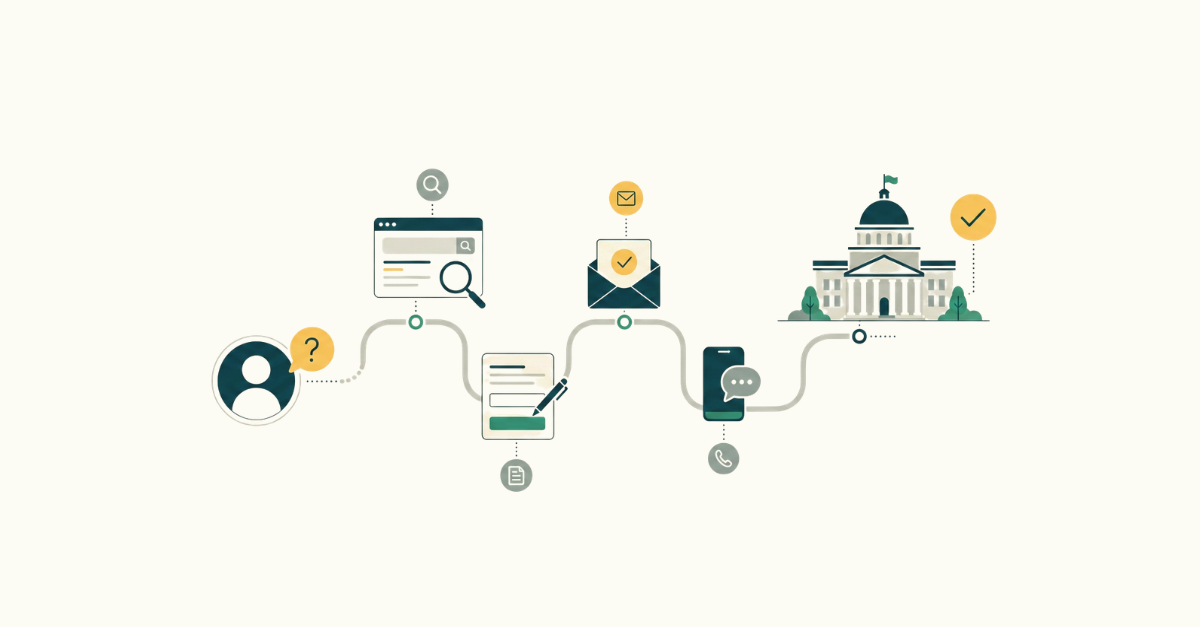
Healthcare marketing has been reshaped by how people make decisions about care.
What used to happen through referrals and phone calls now often begins with a late-night search, a comparison of reviews, and a quick scan of provider bios on a phone. By the time a patient reaches out, they’ve already formed impressions about who you are and whether you feel trustworthy. The path from “I need care” to “I booked an appointment” now runs through experiences that didn’t exist a generation ago.
The environment around that decision-making has also become more demanding. Privacy regulations require care in how you communicate. Competition has increased across nearly every specialty. And expectations around speed, clarity, and convenience are being set by experiences outside of healthcare.
If you’re part of a marketing team trying to keep up in the world of healthcare digital marketing, you’re not alone. The goal of this guide is to understand what actually influences patient decisions today, and how to build a marketing approach that supports those moments in a deliberate, sustainable way.
What Is Healthcare Marketing Today?
Healthcare marketing today is about helping the right patients find the right care at the right time and making that process feel seamless. It’s about reducing the distance between a patient’s needs and the care that can meet it.
That applies whether you’re part of a large hospital system, a specialty practice, or a growing network of clinics. The channels may vary. The budgets may differ. But the core challenge is the same. Patients are making more of these decisions on their own, and your digital presence often shapes that choice before you ever speak with them.
Why Healthcare Marketing Is More Complex Than Other Industries
Healthcare operates under constraints that don’t exist in most other industries, and those constraints shape what “effective” marketing actually means. Most industries don’t have to balance trust, compliance, and urgency at the same level healthcare does.
You’re balancing regulatory requirements like HIPAA with the need to communicate clearly. Decisions are rarely made by a single individual in isolation. And unlike retail or SaaS, the stakes are personal and often urgent.
That combination changes the bar. Tactics that feel persuasive elsewhere can feel inappropriate here. Speed matters, but so does reassurance. Clarity matters, but so does accuracy. Good healthcare marketing respects that tension rather than trying to simplify it away.
The Shift to Consumer-Driven Healthcare
Patients are taking a more active role in how they choose care, but that doesn’t mean the process is simple or confident.
They search for symptoms before providers. They read reviews before scheduling. They expect clear pricing, easy booking, and fast answers. And they’re doing most of this on their phones.
For healthcare organizations, this shift doesn’t replace clinical excellence. It makes access to that excellence more visible and scrutinized.
Building a Healthcare Marketing Strategy That Works
A strong healthcare marketing strategy creates alignment. It connects your goals, your audience, and your execution in a way that actually drives patient growth.
A common pattern is jumping quickly into execution without that connective tissue. The result is activity without accumulation.
The framework below is meant to avoid that.
Step 1: Define Your Patient Audiences (Not Just “Patients”)
“Patients” is too broad to guide meaningful decisions.
A person searching for urgent care has very different needs than someone researching an elective procedure. The same goes for primary care, specialty care, and ongoing treatment.
Start by segmenting your audiences based on:
- Service lines and condition
- Demographics and life stage factors
- Intent and urgency
- Geographic considerations
The more specific you get, the easier it becomes to create messaging and experiences that actually resonate.
Step 2: Map the Patient Journey
Most patient journeys follow a similar path. Awareness. Consideration. Conversion. Retention. But the friction points are where strategy lives.
Where do patients first encounter you? What information do they rely on to evaluate you? How easy is it to take the next step once they’ve decided? Mapping this journey helps you identify where you’re losing people. Mapping the journey makes those gaps visible and fixable.
Step 3: Align Marketing with Operations
Marketing can create intent, but it can’t fulfill it. If your campaigns drive demand, but scheduling is difficult, you lose patients. If follow-up is inconsistent, retention suffers. If intake processes are slow, conversion drops.
The strongest healthcare marketing efforts are closely tied to operational realities. That includes scheduling systems, intake processes, and patient communication workflows. When those align, improvements in marketing performance tend to compound. When they don’t, gains are short-lived.
Step 4: Set Measurable Goals (KPIs That Matter)
It’s easy to default to metrics that are readily available, such as traffic, impressions, and clicks.
They have value, but on their own they don’t tell you whether your marketing is working in a meaningful sense.
More useful indicators include:
- Appointment volume
- Conversion rates
- Patient acquisition cost
- Channel performance
Clear goals make it easier to prioritize and to explain results to leadership in a meaningful way.
Core Medical Marketing Strategies That Deliver Results
There is no shortage of marketing tactics available. The more useful question is which ones reliably influence patient decisions.
Search (SEO) for Healthcare Providers
Search is often where intent becomes visible. Patients are looking for conditions, treatments, and providers near them. Showing up in those moments is critical.
Focus on:
- Accurate and consistent local listings
- Pages built around conditions and treatments
- Detailed provider profiles
- Technical site health and structured data
SEO takes time, but it compounds and, over time, can become a stable source of patient acquisition.
Content: Earning Trust Before Contact
Content works when it reflects real patient questions, not internal assumptions about what should be communicated.
The most effective pieces tend to be practical and specific:
- Condition and treatment explanations
- Clear answers to common concerns
- Walkthroughs of what to expect
- Short, direct video explanations
Volume is less important than relevance. (We share content pruning tips in our blog.) Patients don’t need more content. They need the right content at the right moment.
Paid Media (PPC & Social Ads)
Paid channels are most effective when they align with clear intent. Search campaigns can capture high-intent queries. Retargeting can bring back visitors who didn’t convert the first time. Social can support awareness for specific service lines.
Focus tends to outperform breadth here. Concentrating on high-value services with clear next steps usually leads to better results than spreading budgets thinly.
Email & Marketing Automation
Many healthcare interactions don’t resolve in a single step.
Email strategy and automation allow you to stay connected in a way that supports both care and retention: Think in terms of lifecycle:
- Appointment reminders
- Follow-up care communication
- Preventive care outreach
- Re-engagement for inactive patients
When done thoughtfully, this creates a better patient experience while improving retention and lifetime value.
Different Contexts, Different Approaches
Not all healthcare organizations face the same challenges, and their marketing strategies shouldn’t look identical.
Hospitals often operate across multiple service lines and balance long-term brand building with immediate patient acquisition. Clinics and private practices tend to compete on accessibility, speed, and specialization.
For multi-location organizations, consistency becomes a central issue. A unified strategy with localized execution usually works best; shared standards paired with market-specific relevance.
Compliance, Privacy, and Ethical Marketing in Healthcare
This is an area many teams treat as a constraint. In practice, it can be a strength.
Clear, ethical marketing builds trust faster than any campaign.
HIPAA Considerations in Marketing
Patient data needs to be handled carefully.
That affects:
- Form design and data collection
- Tracking and analytics setup
- Email and communication workflows
Working with compliant tools and processes is essential. It also creates confidence for both your team and your patients.
Ethical Messaging and Patient Trust
Patients are often in vulnerable positions.
Messaging should be:
- Clear and accurate
- Free of exaggerated claims
- Focused on helping, not pressuring
Trust is hard to earn and easy to lose. Ethical marketing protects it.
Common Healthcare Marketing Mistakes (And How to Avoid Them)
Even experienced teams run into these challenges.
Focusing on Traffic Instead of Patients
More traffic does not always mean more appointments. Shift focuses on conversion and patient acquisition.
Ignoring the Website Experience
Your website is often your front door. If it’s slow, confusing, or hard to navigate, patients leave. Small improvements here can have a big impact.
Not Tracking ROI Properly
Without clear tracking, it’s difficult to know what’s working. Set up measurements early and revisit them regularly. Learn more about the state of analytics in 2026 here.
Treating All Patients the Same
Different patients have different needs. Segmenting your audience leads to better messaging and better outcomes.
The Takeaway
Healthcare marketing is inherently complex because the decisions behind it are complex.
Start with a clear strategy. Focus on the channels that matter most. Align your marketing with patient experience. And measure what actually drives results.
If you’re working through these challenges and want a partner to think through it with you, we’re here. At emfluence, we’ve spent decades helping healthcare teams turn strategy into measurable growth, without losing sight of the people behind the data. Reach out to our team at expert@emfluence.com.