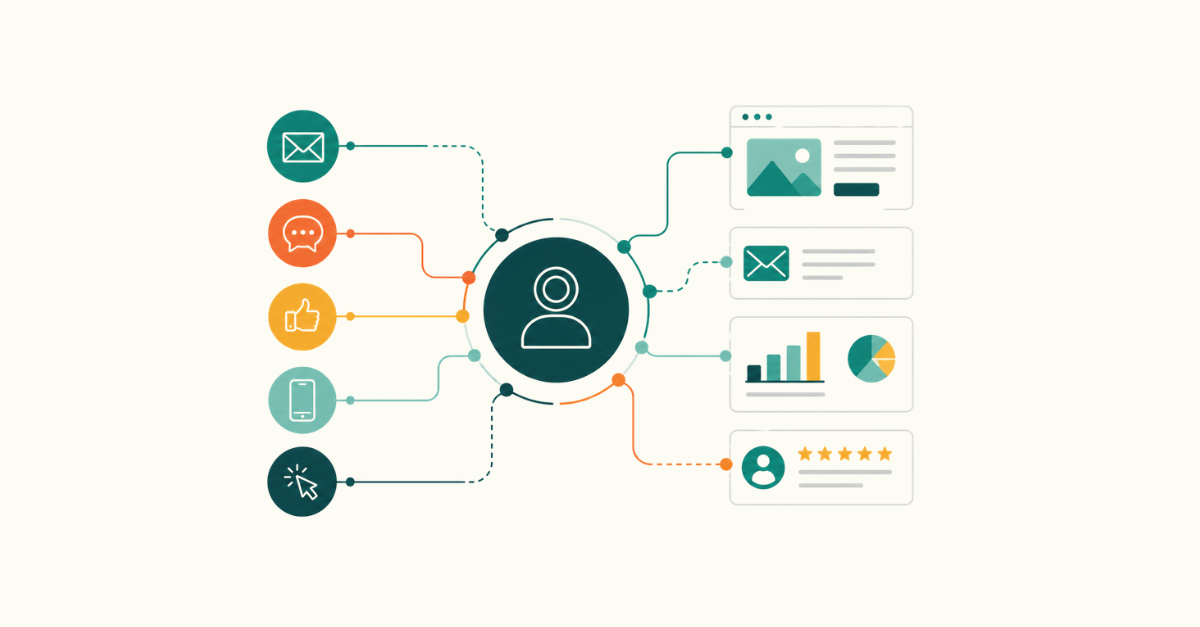

Public sector services are rarely experienced in a straight line. Residents move between websites, emails, forms, phone calls, in-person visits, and third-party systems, often across multiple departments, just to complete a single task.
Yet many public service marketing experiences are still designed around internal structures rather than real resident behavior. Departments focus on individual touchpoints instead of the full journey, leaving residents to piece together information on their own. The result is frustration, repeat inquiries, and dropped engagement.
Designing more effective resident journeys starts with a shift in perspective. Instead of organizing around departments, it means understanding how people actually move through services. By mapping real behaviors, questions, and decision points across both digital and offline channels, public sector teams can uncover gaps, reduce friction, and create more supportive, connected experiences.
Why Resident Journeys Break Down in the Public Sector
Resident journeys often fail not because teams lack effort, but because systems and structures were not designed with the full experience in mind.
Common breakdowns include:
- Department-centric design
Services are organized around internal teams and functions rather than how residents think about their needs. - Disconnected digital systems
Websites, forms, email platforms, and CRMs do not always share data, forcing residents to repeat information or restart processes. - Inconsistent messaging across channels
Information changes depending on where residents look, creating confusion and reducing trust. - Unclear next steps
Residents are given information without guidance on what to do next, especially after submitting forms or requests. - Limited visibility into the full journey
Teams focus on individual touchpoints without understanding how they connect across time and departments. - Reactive improvements instead of planned experiences
Journeys are often adjusted in response to complaints rather than intentionally designed from the start.
Recognizing these breakdowns is the first step toward creating resident journeys that feel intuitive, supportive, and easier to navigate.
What a Resident Journey Really Includes
A resident journey reflects the full experience someone has while trying to access a public service, not just a single interaction or channel.
A complete resident journey typically includes:
- The initial trigger or need
A life event, question, or problem that prompts a resident to seek information or assistance. - Discovery and research
Searching online, navigating the website, reading FAQs, or asking others for guidance. - Digital touchpoints
Websites, landing pages, emails, forms, notifications, and online portals used throughout the process. - Offline interactions
Phone calls, in-person visits, mailed documents, or interactions with partner organizations. - Decision points and handoffs
Moments where residents must choose a next step or are routed between departments or systems. - Follow-up and confirmation
Status updates, confirmations, reminders, or additional requests for information. - Emotional context
Frustration, urgency, confusion, or relief that influences how residents perceive the experience.
When teams account for all of these elements, journeys become easier to design, improve, and communicate across departments.
How to Map Journeys Based on Real Behavior
Effective journey mapping starts with observation, not assumptions.
Start With Resident Goals, Not Internal Processes
Begin by identifying what residents are trying to accomplish, not how departments are structured. Framing journeys around real goals help teams see where processes create friction or confusion.
Use Data to Validate Assumptions
Website analytics, search queries, form abandonment, and support requests reveal how residents actually behave. These insights help teams map journeys based on evidence rather than assumptions.
Identify Key Touchpoints Across Channels
Map every meaningful interaction, including websites, emails, forms, phone calls, and in-person steps. Journeys rarely stay in one channel, and gaps often appear at transitions between them.
Document Questions and Friction Points
Capture where residents hesitate, repeat steps, or seek help. These moments highlight opportunities to clarify content, streamline processes, or improve guidance.
Involve Cross-Department Teams
Journeys often span multiple departments. Bringing teams together to map the full experience creates shared understanding and prevents blind spots.
Focus on What Happens Next
Every step in the journey should clearly indicate the next actions or outcomes. Mapping what happens after a form submission or request is just as important as the initial interaction.
Turning Journey Maps into Better Digital Experiences
Journey maps are only valuable if they lead to action. The goal is to translate insight into tangible improvements.
Prioritize Fixes That Reduce Friction
Journey maps reveal where residents get stuck, repeat steps, or drop off. Focus first on changes that reduce confusion, simplify navigation, or eliminate unnecessary steps across digital channels.
Align Content to Journey Stages
Different stages of a resident journey require different types of content. Clear guidance, contextual explanations, and timely follow-up help residents move forward with confidence instead of searching for answers elsewhere. Learn more about the future of SEO and content marketing in our blog.
Improve Transitions Between Touchpoints
The most frustrating experiences often happen between steps. Clear confirmation messages, status updates, and next-step guidance help bridge gaps between forms, emails, portals, and offline interactions.
Design With Accessibility and Clarity in Mind
Journey improvements should always account for accessibility, readability, and usability. When digital experiences are inclusive by default, fewer residents require additional support. We share a guide to building a website for performance, accessibility, and ROI.
Measure and Iterate Over Time
Journey mapping is not a one-time exercise. Use performance data, feedback, and support trends to refine digital experiences and adapt as residents’ needs change.
Better Journeys Lead to Better Public Service Experiences
When public services are designed around real resident behavior, digital experiences become clearer, more supportive, and easier to navigate. Journey mapping helps public sector teams see where confusion starts, where trust is lost, and where small improvements can make a meaningful difference.
By turning journey insights into better content, clearer guidance, and more intentional digital touchpoints, organizations can reduce friction and improve how residents experience public services across channels and departments.
Looking to create clearer, more resident-centered digital experiences?
emfluence helps public sector teams design digital strategies that reflect how people actually interact with public services. Let’s talk about how journey mapping can support clearer communication and better outcomes.