
Retail marketing isn’t short on ideas, it’s short on clarity.
Most teams already have the channels, the tools, and the pressure to perform. What’s harder is knowing where to focus. What’s actually going to move the needle? What’s worth the time?
That’s where we’re seeing a shift.
The old marketing playbooks (broad promotions, seasonal spikes, heavy paid acquisition) still have a place. But it’s not carrying results the way it once did. Customers expect more. Attention is harder to earn. Costs keep climbing. And the holiday season? It’s less predictable and a lot less forgiving. Read more about marketing in a shifting digital landscape and adapting to algorithms, automation, and AI in our blog.
The brands gaining traction right now aren’t doing everything. They’re doing a few things very intentionally:
Building thoughtful, strategic partnerships
Using personalization to make the experience easier for customers
Preparing for holiday demand earlier than feels necessary
Individually, none of these are new. But together, they’re changing how retail marketing works day to day.
Why Retail Marketing Needs a Reset
Most teams aren’t starting from scratch. They’re layering new expectations on top of existing systems, goals, and constraints. That’s where the tension comes from.
You’re likely dealing with some version of this:
- More channels to manage than ever
- Data that lives in too many places (How ready is your CRM for AI? Find out in our blog).
- Higher expectations around privacy and transparency
- Budgets that require clearer justification
- AI raising the bar for speed and relevance
There’s no single reason retail marketing feels more complex. It’s a combination of pressures that stack on top of each other. Together, they make even simple decisions feel heavier.
Customers Don’t See Channels, They See Experiences
At the same time, your customers aren’t thinking about any of this.
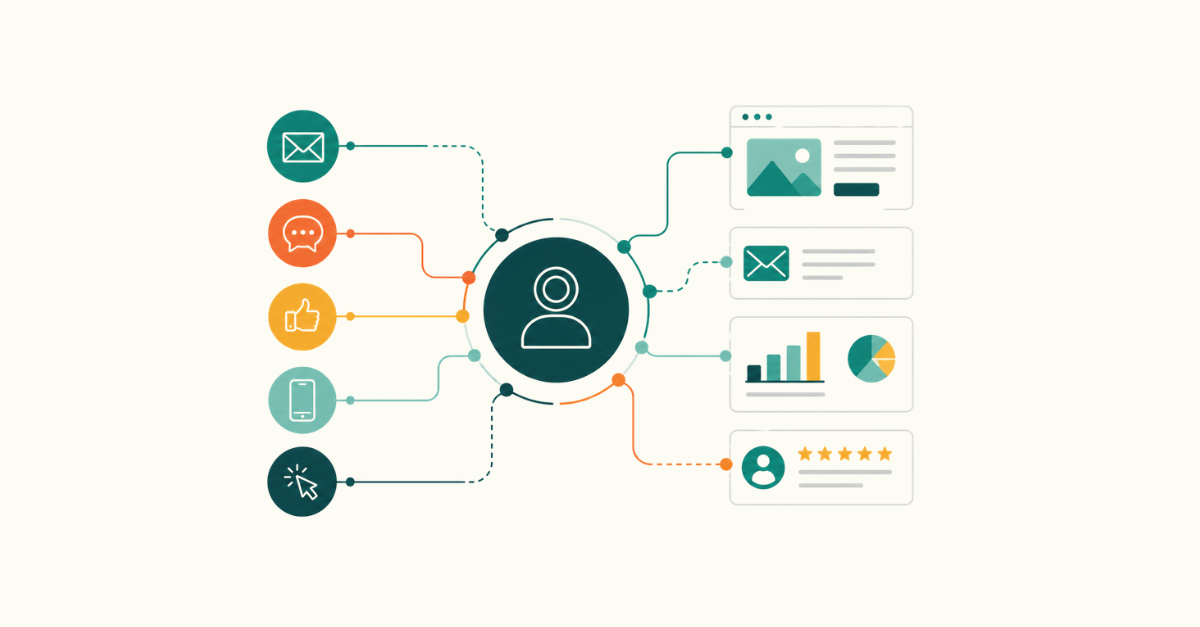
Customers don’t separate email from in-store. Or social from your website. (We share how local businesses win in search on our blog). They just experience your brand as one continuous interaction. And increasingly, they expect that experience to feel relevant.
Not perfect. Not hyper-personal. Just… thoughtful.
They notice when products reflect what they’ve browsed, when messages line up with their timing or intent, or when offers feel like they were chosen, not blasted
They also notice when it feels generic. That gap between relevant and forgettable is where most marketing wins or loses.
One-Size-Fits-All Campaigns Are Easy to Ignore
Batch-and-blast campaigns used to be efficient. Now they’re background noise.
What’s replacing them isn’t necessarily more work, but just more intentional work:
- Triggered messages based on behavior
- Campaigns that adapt instead of repeat
- Content that reflects where someone is, not just who they are
This is where retail personalization moves from theory into practice. It’s not about doing more. It’s about doing what matters, at the right time, for the right audience.
Strategic Partnerships: A More Efficient Way to Grow
Customer acquisition isn’t getting cheaper. Most teams feel that immediately in their paid media performance. Partnerships are getting more attention for a reason. They offer adifferent path. One that’s often more efficient and, just as important, more trusted.
When two brands align well, they don’t just share audiences. They share trust and credibility. And that trust travels faster than most ads.
Types of High-Impact Retail Partnerships
The strongest partnerships tend to be simple, clear, and mutually useful. They don’t all look the same but the most impactful are build around clear value for both sides:
- Brand collaborations
Co-created products or campaigns that give both audiences something new and shareable - Creator and influencer relationships
Longer-term partnerships that build familiarity over time - Retail media networks
Reaching customers when they’re already in a buying mindset - Data and technology partnerships
Connecting systems to make targeting and personalization more effective
Not every model fits every brand. The key is choosing partnerships that make sense for your audience, not just your goals.
What Makes a Retail Partnership Successful
The difference between a partnership that performs and one that fizzles usually comes down to alignment and execution. This can look like a shared understanding of the audience, a natural brand fit (if you have to explain it too much, it’s probably off), and a clear expectation of what success looks like.
Simple ideas tend to travel further. If people can understand it quickly, they’re more likely to engage and share.
Personalization in Retail: Helpful, Not Heavy
If partnerships expand your reach, personalization determines what happens next. And expectations here have shifted. A lot.
What Is Retail Personalization Today (And What It’s Not)
Today, effective personalization is:
- Behavioral – based on what someone has done
- Contextual – based on what they’re doing right now
- Predictive (when useful) – based on what they might need next
It’s also important to say what it’s not. It’s not invasive. It’s not guesswork. And it’s not about using every piece of data you have. Good personalization feels like good service, helpful. It makes things easier.
When personalization clicks, you’ll usually see it in higher conversion rates, larger average orders, and stronger repeat behavior over time. Good personalization does this not because it’s flashy but because it removes friction. It helps customers find what they’re looking for faster. And it makes marketing feel less like marketing.
Making Personalization Actually Work
This is where things can feel stuck. Not in theory, but in execution.
A few places to focus that consistently pay off:
- Get your data working together
It doesn’t have to be perfect, but it does need to be connected. If your data is fragmented, the experience will be too. Learn more about the state of analytics In 2026 in our blog. - Segment beyond demographics
What people do is more useful than who they are on paper. Behavior and intent tell a much clearer story. - Use real-time triggers where you can
Browse activity, cart behavior, and product views are natural entry points that create opportunities to engage. - Keep the experience consistent across channels
Email, SMS, web, and ads should feel like they’re part of the same conversation. We share more insights on building a multichannel funnel that actually converts in our blog. - Start simple and improve over time
You don’t need a complex system to make a noticeable impact. Personalization improves over time so test and iterate as needed.
The tactics themselves aren’t complicated. The impact comes from how consistently they’re applied. They look like:
- Product recommendations tied to browsing or purchase history
- Emails that change based on customer behavior
- Offers aligned with loyalty or engagement
- Experiences that reward more than just transactions
Holiday Success Starts Earlier Than You Think
The holiday season still drives a huge amount of revenue, but it’s less predictable than it used to be.
One of the most common challenges is waiting until Q4 to plan. When planning starts too late, it’s hard to recover from. By the time campaigns are live, there’s little room to adjust.
Key Holiday Shopping Consumer Behavior Trends
A few shifts are shaping how customers approach the holidays:
- Shopping starts earlier (often well before Q4) with promotions shared well before traditional peak dates
- Customers are price-aware and experience-focused
- Buying cycles move through mobile-first, omnichannel journeys. Customers are moving between devices and locations without thinking about it
- Recommendations from brands, creators, and algorithms carry more weight
All of this makes preparation more valuable. You don’t need a massive overhaul. But you do need a head start.
- Start planning in Q2 or Q3
- Build and refine audience segments early
- Align campaigns with actual inventory
- Map out a promotional calendar with flexibility built in
The goal is to give yourself room to respond.
How It All Connects: A Unified Retail Marketing Strategy
Individually, partnerships, personalization, and holiday readiness are valuable. Together, they’re much more effective.
- Partnerships bring in new, high-quality audiences
- Personalization helps you make the most of that attention
- Early planning ensures you’re ready when demand peaks
There’s also a compounding effect.
Partnerships can improve your data. Better data improves personalization. Better personalization improves holiday performance.
That’s where things start to feel less reactive and more intentional.
A Note on Scaling Without Burning Out Your Team
Marketing automation (check out emfluence’s marketing automation platform) quietly does a lot of heavy lifting. Not as a buzzword, but as practical support that connects all of the pieces:
- Centralized data for a clear customer view
- Automated workflows and triggered messages based on real behavior
- Cross-channel orchestration that keeps messaging consistent
It allows teams to do more without adding complexity and makes what you’re already doing work harder. Learn how to make smarter, quicker marketing decisions with proper attribution and automation in our blog.
The Takeaway
Retail marketing isn’t getting simpler. But it is getting more connected.
The brands making progress focus on what actually improves the customer experience and building from there.
If you’re figuring out how to bring those pieces together, you’re in good company.
Start with what’s manageable, improve what’s already in motion, and build toward a system that feels connected, not chaotic. And if you want a second set of eyes on it, we’re always happy to talk. Reach out to our digital marketing experts at expert@emfluence.com.