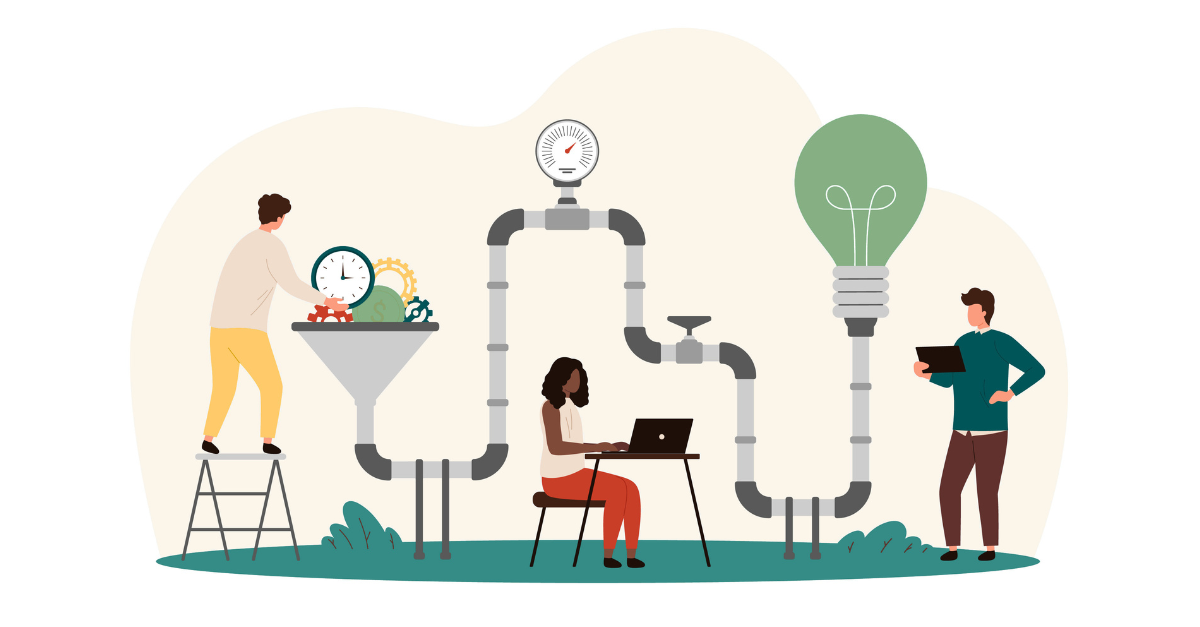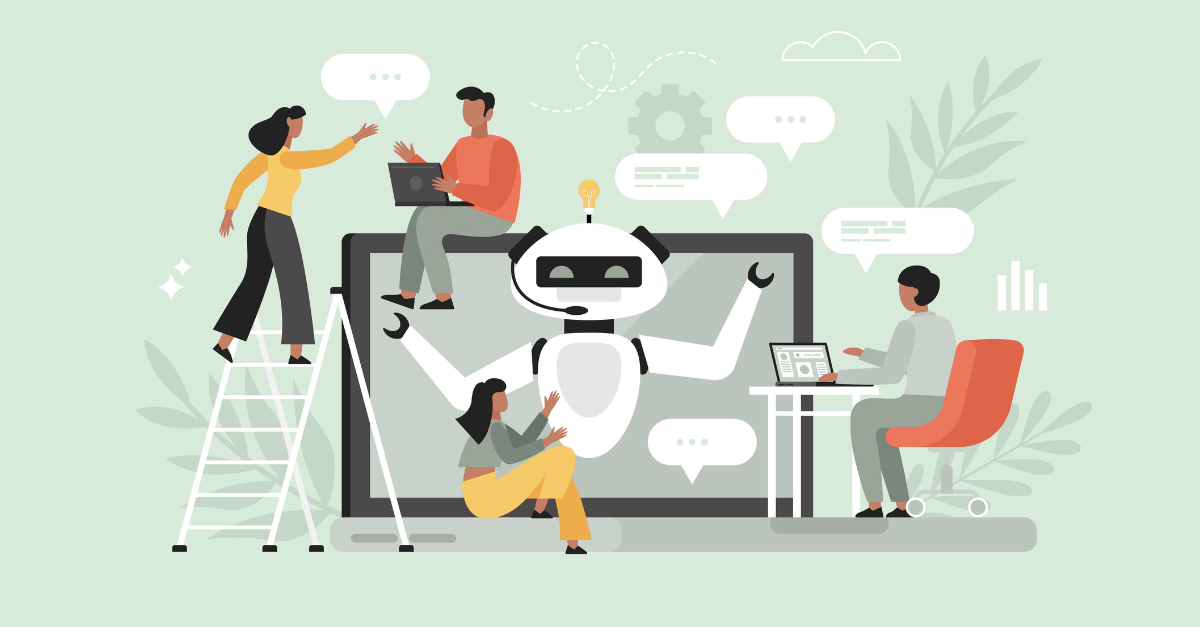

AI isn’t making marketers obsolete, but it’s making mediocre marketing impossible to hide. Organizations that use AI intentionally move faster, personalize smarter, and free their teams to focus on higher-value work. When AI supports strategy instead of replacing it, the result is content that actually resonates and performs.
That opportunity is powerful, but it comes with responsibility. Ethical AI isn’t a limitation; it’s a competitive edge.
Why Ethics Matters in AI-Driven Marketing
AI isn’t just a tool. It’s a decision-maker in your campaigns, copy, targeting, and even product direction. And decisions have consequences.
Marketing leaders are now navigating questions that didn’t exist five years ago:
- How personalized is too personalized?
- Should we automate messaging that a human hasn’t reviewed?
- Are we reinforcing bias without realizing it?
- Are we protecting customer trust while we innovate?
- Is the information that AI is providing factual?
Many teams are experimenting with AI, but not all have clearly defined guidelines for how it should be used. That’s where thoughtful decision-making can turn experimentation into real value.
When brands lean too hard into automation, customers feel it. Messages get tone-deaf. Content blends together. Experience becomes transactional. Ethical AI ensures innovation doesn’t come at the cost of authenticity.
Ethics Isn’t a Barrier, It’s a Strategy
Responsible AI use signals sophistication, not constraint. It tells customers, “We will use technology to enhance your experience, not exploit your data or attention.” In markets where trust is currency, that positioning matters.
This is especially important in industries like healthcare, finance, government, and insurance where automation touches sensitive information. But even in B2B, users are quick to recognize when a message was written for everyone instead of for them.
Because the barrier to entry is so low, ethics isn’t a legal hurdle. It’s a brand differentiator.
Where AI Accelerates, Humans Elevate
AI can sort through mountains of data, identify behavioral clusters, and build performance predictions. But strategy still belongs to humans.
An AI can write an email. A marketer understands why someone opens it.
Human creativity still leads when:
- Interpreting emotional nuance
- Crafting brand stories and messaging frameworks
- Understanding political, cultural, or industry sensitivities
- Designing experiences that feel personal and intentional
AI is the engine. Humans are the steering wheel.
The Balanced Model: AI as Co-Creator, Marketer as Decision-Maker
The most successful marketing teams aren’t “AI-forward.” They’re “AI-informed.” They use AI to accelerate the work they shouldn’t spend time on, like drafting first passes, analyzing data, repurposing content, and redirect their energy toward what drives revenue: strategy, creativity, segmentation, experimentation, and storytelling.
Think of AI as a creative partner sitting at the table, not the director in the room.
A balanced workflow might look like this:
- AI drafts → human refines tone and direction
- AI clusters audiences → human validates segmentation logic
- AI generates concepts → designers bring them to life visually
- AI suggests optimizations → marketers use judgment to implement
Speed + perspective = advantage.
Guardrails Keep Innovation Responsible and High Performing
Here’s where teams often struggle. They sprint ahead on adoption but skip the structure. Without guidance, everyone uses AI differently. Brand voice drifts. Data sources vary. Attribution gets messy.
At a minimum, teams should align on:
What data is allowed in prompts
- Approved: public content, anonymized data, existing brand-approved assets
- Not approved: PII, client data, proprietary financials, credentials, internal roadmaps
What requires human review
- Customer-facing copy
- Personalized journeys and triggered campaigns
- Anything tied to compliance, pricing, or legal claims
Fact-check expectations
- AI-generated facts are treated as drafts, not sources
- Statistics, claims, and benchmarks must be verified before publish
IP and confidentiality rules
- No uploading licensed, confidential, or client-owned materials unless explicitly approved
- Outputs are reviewed for originality before reuse or distribution
Accountability
- One clear owner signs off on final outputs
- Approvals and edits live in documented workflows—not ad hoc chats
A modern AI governance framework should also include:
Clear usage rules
Not a 20-page policy. Just clarity on where AI assists, where it doesn’t, and who owns final approval.
Voice training and prompt standards
Brand consistency requires inputs: real examples, tone guidance, messaging pillars, and approved content.
A review loop
AI can move fast, but accountability doesn’t disappear—especially in automated journeys and personalization logic.
Data hygiene checks
AI reflects the data it’s given. Clean, current, ethical data is non-negotiable.
With these guardrails in place, AI becomes an accelerator, not a risk — empowering teams to scale creativity without sacrificing control.
Responsible AI = More Time for High-Value Work
When AI handles repetitive production work, marketers finally get back to what most of us got into this field for in the first place: solving problems creatively.
More room for:
- Customer journey optimization
- A/B testing beyond surface-level changes
- Cross-channel storytelling
- Deeper research and audience empathy
- Real experimentation and bold ideas
It’s not AI replacing marketers. It’s AI giving marketers their craft back.
The Brands That Win Will Be the Ones That Feel the Most Human
Customers don’t remember automation. They remember experiences. The companies who lead in the next decade won’t be the ones using AI recklessly. They’ll be the ones who use it thoughtfully to scale creativity, not dilute it.
AI can accelerate your voice. But only ethics and people can give it soul.
Where Creativity and AI Meet
AI is most powerful when paired with human creativity and thoughtful guardrails. Innovation works best when it serves strategy, not shortcuts.
Curious how intentional AI use could support your team’s strategy? Let’s talk.