
Marketing shifts fast, but 2026 will bring a sharper divide between teams that adapt early and teams that spend the year playing catch-up. AI will continue to reshape how marketers plan, create, optimize, and measure. Privacy changes will tighten. Channel performance will fluctuate more quickly. And the brands that win will be the ones that balance strategy with agility.
To help you get ahead of what is coming, we asked leaders across emfluence to share the trends they believe will shape the next year. These insights come directly from the work we are doing with clients across paid media, SEO, email, analytics, and web experience.
Here is what to expect in 2026, and how to prepare now.
Strategy: Insights from Our Leadership Team
Strategy in 2026 will look different from the past few years. The market is moving faster, AI is reshaping both creative and operational workflows, and customer expectations continue to rise. Leadership teams are shifting away from long, rigid marketing plans and toward approaches that allow for faster learning and smarter iteration.
Agile marketing becomes the baseline
Teams can no longer wait months to test ideas. Shorter planning cycles, rapid experimentation, and fast turnarounds will define high-performing programs. The brands that adapt fastest will outperform the ones that wait for “perfect.”
AI becomes a strategic advantage, not just a production tool
AI will play a bigger role in content creation, customer insights, forecasting, and workflow automation. But the competitive edge will come from how teams apply AI, not how much they use it. Human oversight, brand alignment, and clear governance will separate strategic adoption from noise.
Journey stage alignment matters more than ever
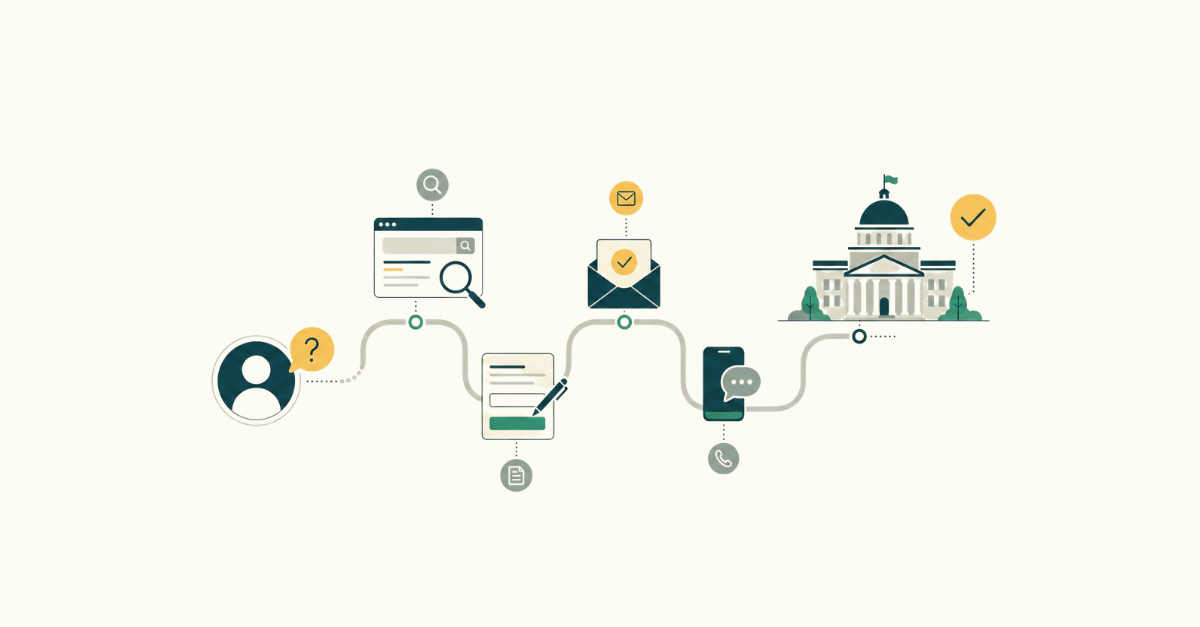
Marketing, sales, and customer success need a unified view of the journey. That means shared KPIs, connected data, and orchestration across channels. Disconnected teams waste budget and create inconsistent customer experiences.
Content quality beats content volume
Search algorithms and audience behavior both reward clarity and value. Publishing high-impact pieces tied to user intent will outperform high-frequency content calendars that lack purpose.
Customer trust and data privacy influence every decision
With increasing scrutiny on data usage, brands must be transparent and thoughtful about how they collect and activate data. First-party data strategies and CRM integrations will play a major role in what is possible.
Key Takeaway
2026 will reward marketers who combine strategic foresight, clean data, connected systems, and AI-assisted execution. Teams that operate with agility and clarity will stay ahead of the curve.
Paid Media
Paid media in 2026 will be shaped by higher costs, less visibility, and more reliance on machine learning. Success will depend on strong creative, clean data, and measurement models that do not rely on perfect attribution.
AI-driven optimization becomes standard
Machine learning bidding and predictive audience tools are no longer a competitive advantage. They are the baseline. The opportunity now lies in feeding platforms better first-party data and stronger creative inputs so the algorithms can perform at a higher level.
Creative diversification drives performance
Static ads alone will not cut it. Short-form video, motion graphics, UGC-style content, and modular creative variations will outperform single-format campaigns. Brands that build creative specifically for platform behavior will see lower CPAs and stronger engagement.
CPCs continue to rise
Competition increases and targeting precision decreases, which means costs will keep climbing. The response is not always bigger budgets. It is smarter distribution. Expect more focus on high-intent placements, retargeting, and mid-funnel content that warms audiences before conversion campaigns.
Attribution becomes more complicated
Between privacy changes and platform reporting gaps, marketers will continue to lose visibility into full-funnel performance. Modeled conversions, media mix modeling, and controlled experiments will be necessary to understand real impact.
First-party data takes center stage
Without reliable third-party tracking, advertisers must rely more heavily on CRM integrations, offline conversions, and clean audience lists. This is where marketing automation and paid media strategies overlap.
Key Takeaway
Paid media teams win in 2026 by pairing strong creative and clean data with platform automation. The more you rely on last-click insights, the less prepared you will be.
Website
Websites in 2026 will need to be faster, clearer, and far more intentional. Visitors expect immediate relevance, intuitive navigation, and proof of value within seconds. The brands that win will be the ones that design for clarity and performance rather than complexity.
Conversion-led design becomes the priority
Sites that try to do everything at once lose visitors. 2026 web trends lean toward streamlined layouts, simplified messaging, and focused paths that guide users toward action. Strong value propositions and purposeful CTAs will matter more than decorative design.
Personalization becomes more accessible
AI-assisted personalization will expand behind the scenes. Dynamic modules, recommended content blocks, and tailored user journeys will become easier to deploy. Brands with clean CRM data will see the biggest gains.
Performance and accessibility expectations rise
Google continues to reinforce user experience as a ranking signal. Fast load times, clean code, and WCAG-compliant design are no longer nice-to-haves. They are table stakes for visibility and trust.
Modular content systems support agility
More organizations are shifting to component-based builds. This makes it easier to update pages, test variations, and scale content without redesigning the entire site.
Stronger alignment between brand and website
Inconsistent messaging or outdated positioning hurts conversions. Brands will focus more on aligning visual identity, content tone, and service language across their top pages.
Key Takeaway
Websites that feel fast, clear, accessible, and user-centric will outpace those that rely on complexity or outdated design philosophies.
SEO
SEO in 2026 will be defined by clarity, authority, and user value. Search engines are getting better at understanding intent and worse at rewarding content that exists only to fill space. The brands that win will be the ones that produce meaningful, accurate, experience-backed content and maintain clean site ecosystems.
Search intent becomes even more precise
Google continues to refine intent matching. Content must answer exactly what users are trying to accomplish, not just target a keyword. Pages that fail to satisfy intent will lose visibility regardless of technical optimization.
Content pruning becomes a standard practice
Removing outdated, low-value, or duplicative posts helps strengthen topical authority and improve overall rankings. A smaller, higher-quality content library is now better for SEO than a large one filled with weak posts.
Entity-based SEO expands
Search engines are increasingly focused on how topics connect, not how many keywords appear on a page. Brands that build depth around their core subjects will outperform those chasing volume.
Better structured data adoption
Schema enhancements support clarity, help search engines understand context, and improve eligibility for rich features. Structured data will move from a “nice to have” to a baseline expectation.
AI-generated content increases noise
With AI flooding the web, originality, credibility, and human insight become more valuable. Search engines will reward expertise that cannot be easily duplicated.
Local SEO evolves
Local packs, map experiences, and service-area refinements continue to shift. Businesses with accurate listings, consistent NAP data, and optimized local content will adapt fastest.
Key Takeaway
SEO success in 2026 hinges on authority, quality, and a clean content ecosystem. The days of winning through volume alone are over.
Content Marketing
Content marketing in 2026 will reward clarity, expertise, and intent-driven storytelling. Audiences have become more selective. AI-generated content has created more noise than value. And brands are realizing that publishing for the sake of publishing no longer pays off.
Quality rises, volume falls
Teams will focus on content that solves real problems, demonstrates expertise, and supports funnel progression. Fewer posts, more depth. Fewer campaigns, more impact.
Original insights outperform generic AI content
As AI makes content production easier, the bar for meaningful content gets higher.
Audiences gravitate toward pieces that contain:
- Internal perspectives
- Proprietary data
- Actual experience
- Point of view
Your brand voice and expertise become your differentiators.
Repurposing becomes a strategic advantage
High-performing content will be turned into:
- Short-form social
- Email nurture assets
- Webinars
- Sales enablement pieces
- Downloadable guides
A single strong idea will fuel multiple channels. Recycling is out. Repurposing is in.
Topic clusters and pillar content strengthen authority
Instead of writing standalone posts, teams will organize content around strategic themes. This improves SEO, supports user navigation, and reinforces thought leadership.
Content connected to CRM data performs better
As more teams lean on first-party data, content will become more personalized and better aligned to journey stages. Content strategy and CRM strategy will move closer together.
Key Takeaway
The brands that win in 2026 will publish less but say more. Original thinking, depth, and clear relevance will set strong content apart from the AI-generated noise.
Email Marketing and Marketing Automation
Email marketing in 2026 will be shaped by smarter data, tighter deliverability controls, and a shift toward highly personalized customer experiences. Broadcast calendars will still exist, but the brands that win will rely more heavily on automation and CRM-driven targeting.
Behavior-based journeys outperform broadcasts
Triggered emails tied to user actions deliver higher engagement and stronger conversions. Welcome flows, onboarding sequences, re-engagement paths, and post-purchase messaging will continue to outperform standard newsletters.
CRM integration becomes non-negotiable
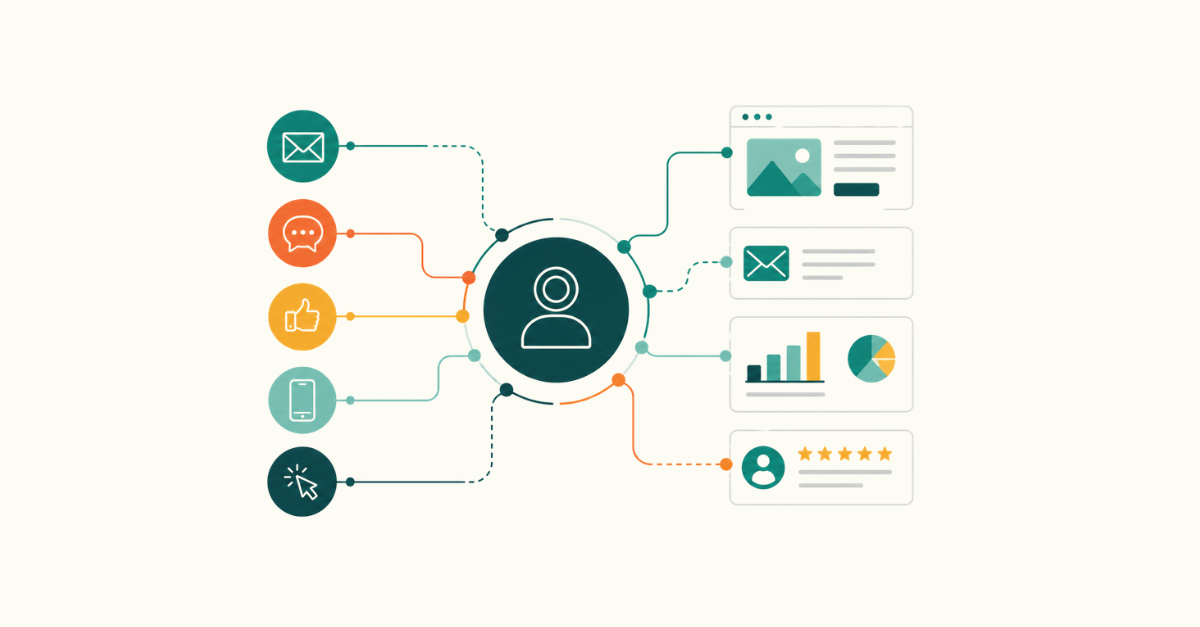
Clean, synced CRM data powers better segmentation, personalization, scoring, and nurturing. Brands with reliable data connections will build more effective journeys and respond to customer behavior faster.
Deliverability rules tighten
ISPs are placing more weight on reputation, consistency, and user interaction. Strong authentication, list hygiene, and send patterns will matter more than ever. Marketers cannot ignore this.
AI assists production but does not replace strategy
AI writing tools will help marketers draft content, refine tone, and generate variations for testing. The real advantage will come from human review and the ability to apply brand voice and accuracy at scale.
Personalization becomes more sophisticated
Dynamic content, conditional logic, and multi-branch automations help brands send emails that feel relevant, not templated. The gap widens between brands that use advanced personalization well and those that rely simply on default fields like first name.
Journey stage mapping drives retention and revenue
Teams will adopt more intentional lifecycle design. Understanding where each customer is in their journey and building messaging around that stage becomes a key differentiator.
Key Takeaway
Email and automation success in 2026 comes from clean data, thoughtful journey design, and a strong connection to your CRM. Relevance and timing beat volume every time.
Analytics
Analytics in 2026 will be defined by imperfect visibility, smarter modeling, and tighter alignment between marketing performance and revenue. Teams can no longer rely on a single platform or a single metric to tell the full story. The organizations that succeed will be the ones that build measurement systems that acknowledge ambiguity and still drive clear decisions.
Modeled data becomes standard
With privacy changes, limited tracking, and shrinking attribution windows, modeled conversions and predictive signals will replace the concept of “exact” data. Teams that accept this will make better decisions than those waiting for perfect clarity.
Event-based tracking becomes the foundation
GA4 and server-side tagging push marketers toward more intentional measurement. Clean event structures, naming conventions, and tagging processes become essential to understanding user behavior.
Fewer KPIs, more meaningful ones
Teams will shift away from large dashboard grids and focus on a tighter set of KPIs tied to actual outcomes. Revenue influence, qualified pipeline, lead-to-MQL conversion, and lifecycle velocity will matter more than vanity metrics.
Measurement becomes cross-functional
Marketing, sales, and customer success must align on definitions, timelines, and data ownership. Shared dashboards and shared metrics reduce friction and improve decision-making.
Controlled experiments return in force
As attribution becomes less reliable, incrementality testing and holdout groups become more valuable. Marketers will rely on experimental design to validate whether a channel or tactic truly works.
Data hygiene drives accuracy
Clean CRM and MAP data directly improve reporting. Better data in means better insights out. Analytics teams will increasingly partner with CRM owners to fix problems upstream.
Key Takeaway
Analytics in 2026 is about clarity, not certainty. Teams that embrace modeling, clean data, and aligned KPIs will make more confident decisions and deliver stronger results.
Conclusion
2026 will be a year shaped by smarter data, clearer strategy, and more intentional execution. AI will accelerate production and insights, but the real advantage will come from how teams apply that intelligence across channels. The brands that win will connect their systems, refine their content, measure what matters, and adapt faster than the market changes.
If you want support building a 2026 plan or aligning your strategy across channels, our team is ready to help. Reach out to us at growthexperts@emfluence.com.