
For a long time, B2B growth followed a familiar pattern: marketing filled the funnel, and sales took it from there. That model worked when buyers relied on sales teams to access information. It doesn’t reflect how decisions are made today.
B2B buyers now behave much more like consumers. They research independently, compare options across multiple channels, and form strong opinions before ever speaking to sales. In fact, nearly 70% of the B2B buyer’s journey is completed before a sales conversation even begins. At the same time, more than 80% of buyer interactions now happen in digital environments—your website, your content, your emails—not in meetings.
That shift changes the role of marketing entirely.
The B2B Buying Journey Has Changed
Buyers expect clarity, speed, and control. They want to understand your value quickly, validate it through content and proof, and move forward when they’re ready—whether that’s booking time with your team or completing part of the purchase on their own. This is also why B2B ecommerce has grown from a secondary channel to a primary expectation, with U.S. B2B ecommerce surpassing $2 trillion in recent years.
Modern B2B growth isn’t about generating more leads. It’s about creating a connected experience that supports buyers from early education through decision and purchase.
The organizations seeing the most consistent results are aligning three core systems:
- Lead nurturing that builds trust and educates over time
- Digital sales enablement that helps buyers navigate decisions with confidence
- B2B ecommerce that removes friction when buyers are ready to act
When marketing automation, CRM, and ecommerce platforms are connected, the experience becomes more than efficient—it becomes intuitive. Buyers move forward naturally, and revenue follows with less resistance.
Where AI Fits in the Modern B2B Journey
Artificial intelligence is also starting to play a practical role in how marketing teams support this process. AI-powered tools can help surface intent signals, personalize content recommendations, and adapt to messaging based on behavior. Used thoughtfully, this isn’t about adding complexity, but it’s about making each interaction more relevant and more timely.
The Shift to Digital-First Buying
At the same time, the foundation still matters. Search, content, and discoverability continue to shape how buyers find and evaluate solutions. What’s changed is how those systems work together and how quickly expectations are evolving.
Learn what’s changed and what still works in SEO and content marketing
Alongside this, digital procurement and B2B marketplaces are becoming more common. Buyers are increasingly comfortable evaluating vendors online, comparing options quickly, and moving forward with confidence, often without needing early sales involvement.
For marketing teams, the implication is straightforward: digital touchpoints now influence much of the buying journey. The brands that win are the ones that show up clearly, consistently, and helpfully at every stage, not just at the moment of conversion.
The Growing Expectation for Self-Service
One of the clearest shifts in B2B purchasing is the expectation for self-service.
Buyers want more control earlier in the process. They prefer to explore options, understand pricing, and evaluate fit in their own time before engaging sales. Research from Gartner shows that B2B buyers spend only about 17% of their total purchase journey meeting with suppliers, and that time is often split across multiple vendors.
That expectation is showing up in practical ways:
- Transparent or guided pricing
- Easy reordering and account history
- Personalized portals
- Mobile-friendly purchasing experiences
Once buyers trust a vendor, many are comfortable placing meaningful orders online.
At the same time, this shift is creating a quieter internal tension. As self-service expands, some sales leaders question where they fit. Left unaddressed, this can lead to misalignment, with marketing and sales pulling in different directions.
The reality is that self-service does not replace sales. It refocuses it.
When buyers handle early research and simpler transactions on their own, sales teams can concentrate on higher-value work like complex deals, stakeholder alignment, and long-term growth.
The implication for leadership is straightforward: self-service only works when marketing and sales are aligned. Without that alignment, organizations create fragmented experiences that slow buyers down and introduce internal friction.
When it is done well, self-service strengthens both the buyer experience and the role of sales.
Connecting Marketing, Sales, and Ecommerce
Historically, the B2B path to revenue was linear:
Lead → Sales → Purchase
Marketing generated awareness. Sales built the relationship. The purchase happened at the end.
That model no longer reflects how buyers move today.
The journey is now interconnected:
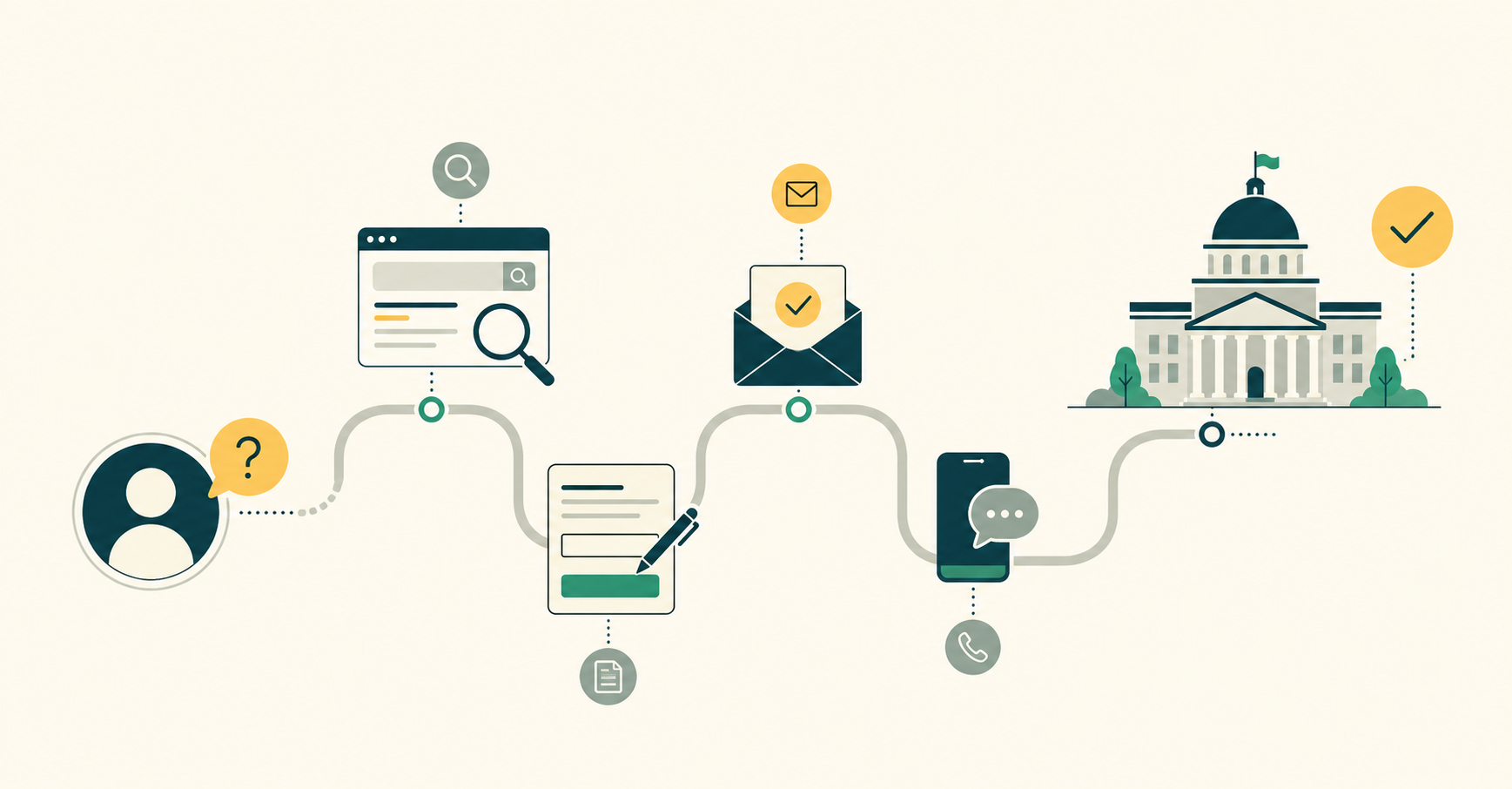
Demand → Nurture → Sales Enablement → Ecommerce → Retention
Buyers move across channels, revisit information, involve more stakeholders, and engage sales when it adds value, not as a required step.
This changes how teams need to operate.
Marketing and sales are no longer separate stages. They share responsibility across the entire experience. Marketing builds context and confidence early. Sales guides decisions at the right moments. Ecommerce removes friction when buyers are ready to act.
The goal is not to add complexity. It is to connect systems and create a smoother path to purchase.
The result is a more natural buying experience and a more reliable path to revenue.
What B2B Lead Nurturing Really Means Today
When people hear “lead nurturing,” they often think of email drip campaigns. A prospect downloads a whitepaper, enters an automated sequence, and receives a few follow-up messages.
Email still plays an important role. (We share essential email campaigns every marketer needs to know in our blog. But modern nurturing is much broader.
At its core, lead nurturing is about helping buyers navigate the research and decision process. It provides context, answers questions, and builds the confidence needed to move forward.
The focus is not on pushing for an immediate sale. It is helping buyers make informed decisions.
That guidance shows up across multiple touchpoints:
- Educational content tied to real questions
- Webinars and product demonstrations
- Retargeting and ongoing visibility
- Account-based outreach for key opportunities
- Thoughtful, well-timed sales conversations
Over time, these interactions shift how buyers see your organization. You move from being one of many options to a trusted, informed partner in the decision.
Read more about this in Content to Conversion: What Works for B2B Marketers.
Why Nurturing Matters Even More with Ecommerce
There is a common assumption that once ecommerce is introduced, lead nurturing becomes less important.
In practice, it becomes more important.
B2B purchases are rarely immediate. They involve research, internal alignment, and multiple stakeholders. According to Gartner, the average B2B buying group includes 6 to 10 decision-makers, each bringing their own priorities and concerns.
Nurturing supports that complexity.
It helps buyers answer internal questions, validate decisions, and build confidence across their organization. It also gives them the language and proof they need to move a decision forward internally.
The most effective assets at this stage are practical:
- Case studies from similar organizations
- Implementation guides that set expectations
- ROI tools that quantify impact
Once that confidence is in place, ecommerce removes friction from the final step.
Nurturing builds the decision. Ecommerce enables action.
Where Lead Nurturing Often Breaks Down
Most teams understand the importance of nurturing. Execution is where it often breaks down.
A few patterns show up consistently:
- Limited segmentation
All leads receive the same experience, regardless of role, industry, or stage - Misalignment between marketing and sales
No shared definition of a qualified opportunity, leading to missed or delayed follow-up - Programs that end too early
Buyers continue researching, but communication stops - Underused behavioral signals
High-intent actions such as pricing page visits or repeat engagement are not used to guide next steps
These issues are not about effort. They are about alignment and structure.
And they are fixable.
What Effective Nurturing Looks Like in 2026
Effective nurture programs are built on relevance, timing, and coordination between marketing and sales.
1. Segmentation that reflects real buying roles
Different stakeholders need different information.
- Technical evaluators want specifications and integrations
- Executives want outcomes, risk, and ROI
Even basic segmentation improvements can significantly increase engagement and conversion.
2. Content that supports decisions
Buyers are not looking for more content. They are looking for useful content.
The assets that perform best help answer specific questions:
- How will this work in my environment
- What does implementation look like
- What results should we expect
Comparison pages, ROI calculators, and industry-specific case studies consistently drive progress in the buying process.
3. Automation guided by behavior
Automation creates consistency. Behavior creates relevance.
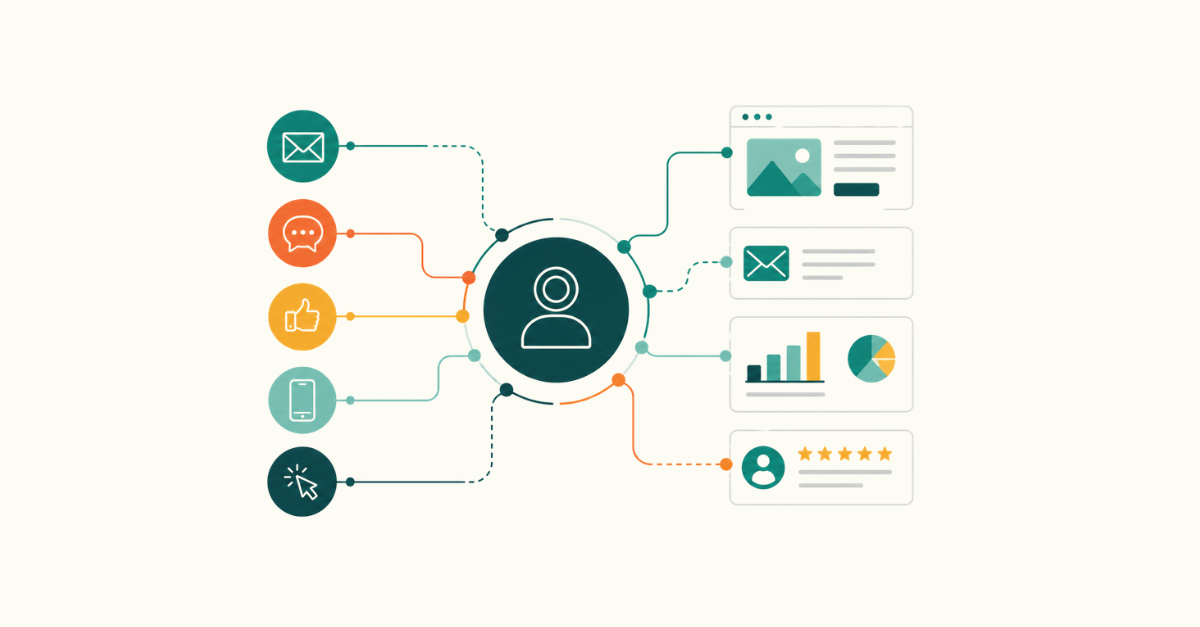
Signals such as repeat site visits, pricing page views, or content downloads should trigger next steps. This might be a personalized content recommendation or timely outreach from sales.
According to McKinsey & Company, companies that effectively use personalization can drive 10 to 15% revenue lift, reinforcing the value of behavior-driven engagement.
4. Measurement tied to revenue movement
Surface metrics only tell part of the story.
Focus on:
- Lead-to-opportunity conversion
- Pipeline velocity
- Influenced and assisted revenue
These metrics provide a clearer view of whether nurturing is actually driving growth.
Trends Shaping B2B Marketing in 2026
Several broader trends are influencing how teams execute.
Artificial intelligence is becoming practical
AI is improving segmentation, intent detection, and content recommendations. Used well, it increases relevance without increasing workload.
(Learn about common mistakes with audience segmentation and how to avoid them here).
Content is becoming more decision-focused
Buyers still value education, but they are prioritizing tools, frameworks, comparisons, and guidance that help them act.
Account-based strategies are expanding
For high-value deals, teams are focusing on a defined set of accounts and delivering more tailored, coordinated experiences.
Marketplaces and procurement platforms are growing
Digital procurement channels are becoming a starting point for vendor discovery, adding another layer to the buying journey.
We share more on what it looks like to adapt to a shifting digital marketing landscape in our blog.
The Takeaway
The organizations seeing the strongest results are not treating lead generation, nurturing, and ecommerce as separate efforts.
They are building connected systems that support the full buyer journey.
That means aligning:
- Lead nurturing that builds trust and clarity
- Digital sales experiences that support evaluation
- Ecommerce capabilities that remove friction at the point of decision
When these elements are connected, growth becomes more predictable and easier to scale.
For most organizations, the opportunity is not to rebuild everything. It is to align teams and remove friction in the current experience.
B2B buying cycles often span 2 to 6 months or longer, involve 6 to 10 decision-makers, and buyers spend only about 17% of that time engaging with suppliers, according to research from Gartner and HubSpot.
The implication is clear. Most of the buying journey is happening independently, over time, and across multiple stakeholders.
Where to Start
Here is where to focus in the next 90 days:
1. Align marketing and sales around the buyer journey
Map how buyers actually move from first interaction to purchase. Identify where handoffs break down, where follow-up is inconsistent, and where teams are working from different definitions of success.
2. Audit your current nurture experience
Review what buyers receive after their first conversion. Is it relevant to their role and stage? Does it continue long enough to support a multi-month decision process?
3. Identify and remove friction in the path to purchase
Look at your website, sales process, and ecommerce capabilities. Where are buyers slowed down or forced to ask for information they expected to find on their own?
4. Use behavioral signals to guide next steps
Prioritize simple triggers like repeat visits, pricing page views, or key content downloads. Use these signals to prompt timely outreach or tailored content.
Progress does not require a full transformation. It requires alignment, clarity, and consistent improvement.
At emfluence, we help marketing teams as they navigate these kinds of transitions. Reach out at expert@emfluence.com to start the conversation.
Read more about marketing trends for 2026 in our blog!