
A decade ago, paid media success felt relatively straightforward: launch campaigns, drive clicks, track conversions, optimize what worked, and repeat.
Today’s customer journey rarely follows that script.
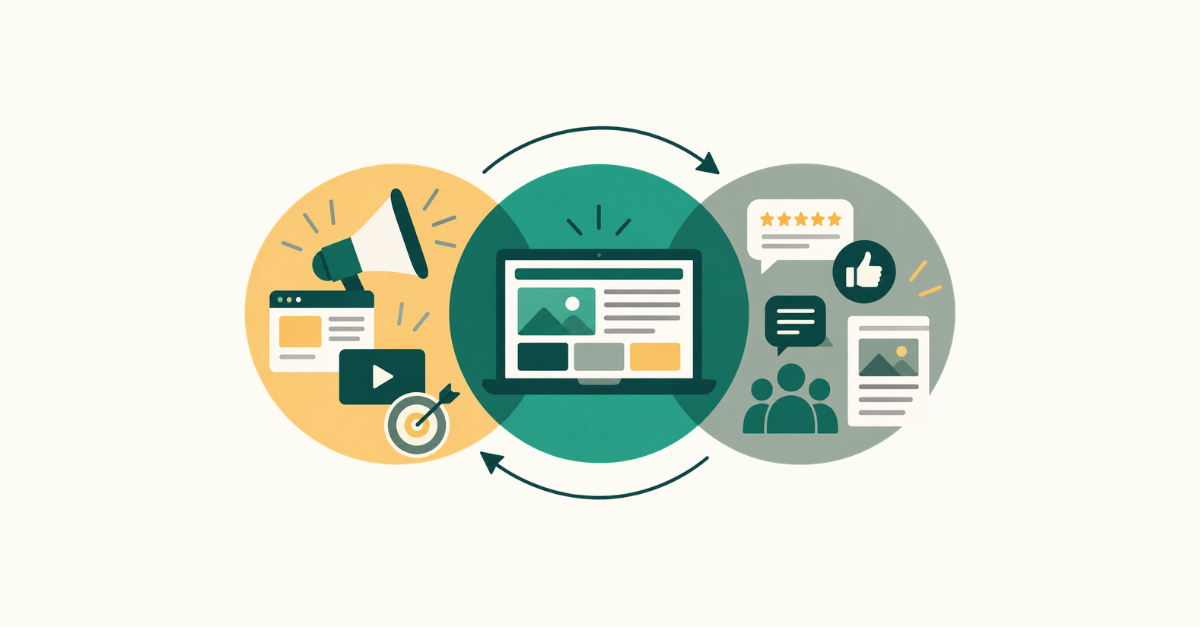
That’s why modern paid media isn’t just about generating clicks. It’s about influencing the entire buying journey and measuring success in a way that reflects how people actually make decisions.
If your reporting stops at platform-reported conversions, you’re probably only seeing part of the picture.
Why Paid Media ROI Is Harder to Measure Than Ever
Launching campaigns has never been easier. Understanding what’s actually driving revenue is the difficult part.
Customer journeys have become longer, attribution models have more blind spots, and privacy changes have limited many of the signals marketers once relied on.
The Customer Journey Is No Longer Linear
Very few buyers convert after a single interaction.
A prospect might click a Google Search ad, leave your website, see a retargeting campaign later that week, subscribe to your newsletter, attend a webinar, speak with sales, and eventually sign a contract weeks later.
So, what deserves the credit?
The search campaign created awareness. Display kept your brand visible. Email nurtured trust. Sales closed the deal.
All those interactions mattered.
That’s why relying exclusively on last-click attribution often undervalues the campaigns doing the work earlier in the buying process.
Read more: Smarter, Quicker Marketing Decisions with Proper Attribution and Automation
Modern paid media should be measured as part of a connected customer journey and not a collection of isolated clicks.
Privacy Changes Have Reduced Visibility
Measurement has gotten harder for technical reasons, too.
Over the last several years, marketers have had to adapt to:
- Third-party cookie deprecation
- iOS privacy changes
- Reduced tracking signals from ad platforms
- Growing consent and data compliance requirements
In practical terms, this means platform dashboards often have blind spots.
You may be generating revenue from campaigns that appear underperforming on paper.
Or worse, pausing campaigns that are quietly supporting pipeline growth.
Revenue Beats Vanity Metrics
Clicks, impressions, and click-through rates all have their place. They’re indicators, but not business outcomes.
We’ve seen campaigns with average CTRs outperform campaigns with “perfect” engagement simply because they attracted higher-quality buyers.
Instead of asking whether a campaign generated clicks, ask questions leadership cares about:
- Did qualified leads increase?
- Did sales velocity improve?
- Did customer acquisition costs go down?
- Did revenue grow?
What Separates Paid Media That Converts from Paid Media That Wastes Budget
Successful campaigns rarely win because of one great ad. They succeed because multiple pieces work together.
Target High-Intent Audiences
The best campaigns aren’t necessarily reaching the largest audiences; they’re reaching the right ones.
Search intent, buying stage, firmographics, CRM engagement, and previous interactions all provide valuable context.
Intent should shape every part of the campaign, from targeting to creative. Someone researching industry trends needs different messaging than someone actively comparing vendors.
Match Messaging to Buyer Needs
Even perfect targeting can’t save weak messaging.
If the ad doesn’t speak to a real pain point, performance suffers. Effective messaging answers three questions quickly:
- What problem do you solve?
- Why should buyers care?
- Why act now?
Small improvements to headlines, offers, or calls to action often outperform wholesale campaign rebuilds.
Testing creative isn’t something you do after launching. It’s part of the strategy itself.
Remove Friction After the Click
Getting the click is only half the job.
A useful way to think about it: Your ad makes the promise. Your landing page has to deliver on it.
The landing page determines whether that click becomes a customer. Slow load times, confusing layouts, lengthy forms, and weak calls to action all create unnecessary friction.
Building a Paid Ad Strategy for the Full Funnel
One of the biggest misconceptions in paid media is that every campaign should drive immediate conversions. Different channels play different roles throughout the buying journey.
The strongest programs recognize that awareness, consideration, and conversion campaigns work together.
Case Study: DM Injury Law Uses Data-Powered Legal Leads: Scaling Cases, Not Costs
Top-of-Funnel: Build Awareness Efficiently
Display, paid social, video, and Connected TV introduce your brand before buyers are actively shopping.
These campaigns aren’t failures because they don’t generate immediate conversions.
They’re creating familiarity.
When prospects eventually search for solutions, brands they’ve already encountered tend to earn more clicks and convert more efficiently.
Mid-Funnel: Nurture Consideration
Once buyers know who you are, your job shifts from attracting attention to building trust.
Retargeting, lead magnets, sponsored content, and email automation help prospects continue evaluating your solution.
This is also where marketing automation becomes especially valuable.
Rather than sending every lead the same follow-up, segmented nurture campaigns keep messaging aligned with buyer intent and behavior.
Bottom-Funnel: Capture Existing Demand
When buyers are ready to act, paid search often delivers the strongest short-term performance.
Brand campaigns, competitor campaigns, and high-intent search terms all help capture demand that’s already in motion.
But here’s the key: Bottom-funnel campaigns perform better because upper-funnel campaigns did their job first.
Demand capture works best when demand already exists.
Why Brand Search Ads Still Matter in 2026
One question never seems to go away: “Why pay for our own brand name?”
The answer is simple: Search results are competitive.
Competitors can bid on your branded keywords, and if your paid listing isn’t present, prospects looking specifically for your business may encounter competing offers before they ever reach your website.
Brand campaigns also tend to deliver some of the most efficient paid search performance available, thanks to lower cost-per-click, higher click-through rates, and stronger conversion rates.
Protecting existing demand is often just as valuable as creating new demand.
Connecting Online Engagement to Offline Revenue
Some of the most valuable conversions never happen online.
Healthcare providers book appointments over the phone. Manufacturers close deals after multiple sales meetings. Retailers generate store visits. Financial services firms convert leads through consultations.
If those actions aren’t connected back to marketing, paid media appears less effective than it actually is.
Tracking phone calls, CRM opportunities, demo bookings, store visits, and offline sales creates a much more complete picture of campaign performance.
The more connected your systems are from advertising platforms to your CRM and sales reporting, the more confidently you can optimize future investment.
Proven Ways to Improve Paid Media ROI
The biggest performance gains often come from improving the system, not increasing spend.
A few strategies consistently create impact:
- Consolidate reporting across channels instead of evaluating each platform independently.
- Use first-party and CRM data to build more relevant audience segments.
- Connect paid campaigns with automated nurture workflows so leads continue moving through the funnel.
- Refresh creative regularly to avoid audience fatigue.
- Test strategically by changing one meaningful variable at a time.
- Use AI to improve bidding, forecasting, and anomaly detection while keeping human strategy at the center. Learn more about conversion optimization in the age of AI and personalization in our blog.
- Allocate budget based on business impact rather than surface metrics like clicks or impressions.
Read More: Future-Proof PPC Strategy Guide for 2026: From Ad Extensions to the Cookieless Future
Paid Media ROI Mistakes Marketing Teams Make
Most underperforming campaigns don’t fail because of one catastrophic mistake. Instead, they lose efficiency through a series of small decisions.
Optimizing exclusively for cheap clicks often sacrifices lead quality.
Ignoring the landing page limits the value of otherwise successful campaigns.
Relying solely on last-touch attribution undervalues awareness and nurture efforts.
And expecting every advertising channel to deliver identical ROI overlooks the reality that each stage of the buyer journey serves a different purpose.
When teams measure channels based on the role they’re meant to play, not just the conversions they generate individually, they make smarter investment decisions.
The Takeaway
Modern paid media requires more than campaign management. It requires connected strategy.
The best-performing campaigns recognize that customer journeys rarely begin and end with a single click. They account for both online and offline conversions, prioritize revenue over vanity metrics, and continuously adapt as buyer behavior evolves.
Many marketing teams are being asked to do more with less. That’s exactly why the right partner can make such a difference.
At emfluence, we help teams build paid media strategies grounded in real business outcomes, with the reporting, automation, and strategic support needed to improve ROI over time. Because paid media should do more than drive clicks. It should drive growth. Reach out to our team at expert@emfluence.com.