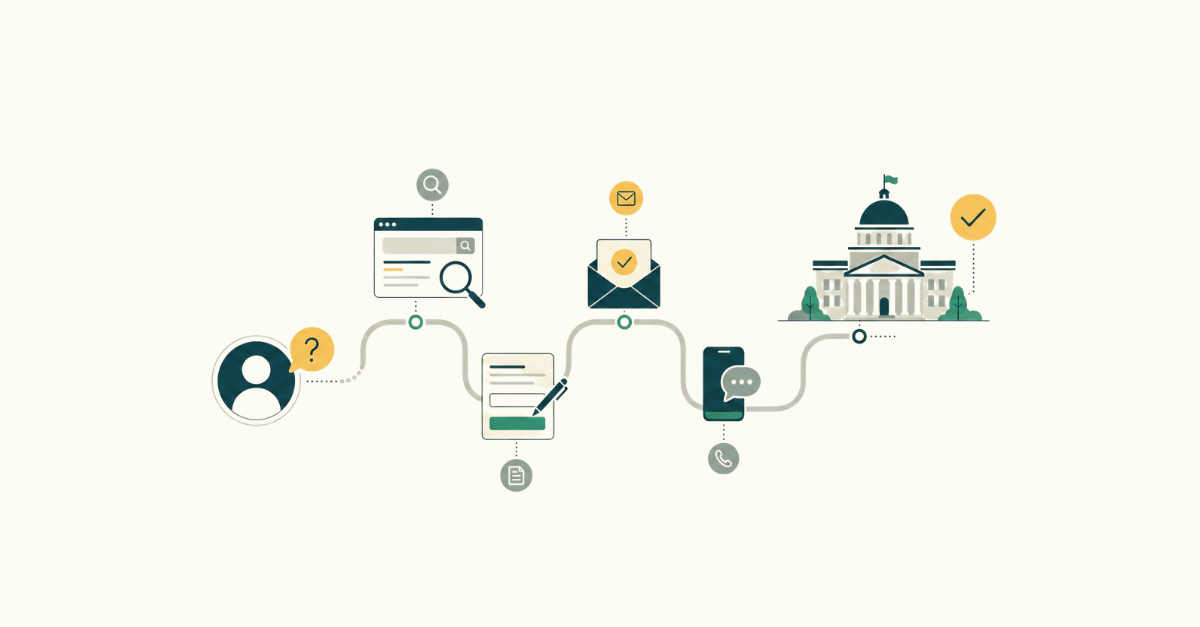

Public sector organizations are expected to communicate more than ever, across more channels, to more audiences, with fewer resources and higher scrutiny. Program updates. Service changes. Emergency alerts. Public meetings. Community initiatives.
All important. All happening at once. Often across different departments, each with their own priorities and timelines.
The result is information overload. Messages overlap. Timing gets crowded. And for the people you’re trying to reach, it’s not always clear what matters or what to do next.
That’s the real challenge. Not just getting information out, but making it understandable, useful, and timely.
Clear, consistent messaging is not just a branding exercise for public sector organizations. It is essential to public trust, accessibility, and effective service delivery. Streamlining how departments plan, create, and distribute communication is the first step toward making sure the right messages reach the right people at the right time.
The Risks of Fragmented Public Communication
Most communication issues don’t come from a lack of effort. They come from how that effort is spread out.
When departments are working in parallel without shared visibility, even strong messages can feel disjointed. Different teams may be talking about similar topics in different ways, using different languages, across different channels. For the public, that creates friction.
One of the biggest risks is eroded trust. If residents receive conflicting messages or struggle to find clear answers, confidence in the organization declines. This is especially critical during high-visibility moments like service disruptions, policy changes, or emergency communications.
Fragmentation also creates accessibility issues, If teams aren’t aligned on standards for plain language, translation, or formatting, some members of the community may be unintentionally left out.
And internally, it’s just hard to keep up. Teams duplicate work, fix misunderstandings after the fact, and spend more time reacting than planning.
What Clear, Coordinated Messaging Actually Looks Like
Clear, coordinated public sector messaging does not mean every department sounds the same or gives up control. It means working from a shared understanding of your audience and making a few intentional choices that reduce confusion.
In practice, that often looks like:
Knowing who each message is for
Not every update needs to reach everyone. The more specific you can be about your audience, the easier it is to make the message relevant.
Using plain language consistently
When program names, timelines, and next steps are described the same way across departments, people don’t have to relearn how to understand you.
Being mindful of timing
Awareness of what else is going out across teams helps avoid overcrowding and makes important updates easier to spot.
Creating familiar structure
Consistent layouts, headers, and design patterns help people quickly find what they need, even when the content changes.
Building accessibility from the start
Content follows accessibility guidelines, supports translation where needed, and is distributed through channels the community actually uses.
When these pieces are in place, communication starts to feel simpler on both sides. Messages reinforce each other. Priorities are clearer. And people don’t have to work as hard to stay informed.
Building a Shared Communication Foundation Across Teams
This is where a lot of organizations get stuck. The goal isn’t more process for the sake of process; it’s just enough structure to make things easier.
A few areas tend to make the biggest difference:
Clear, Usable Standards
A shared foundation starts with documented standards for voice, terminology, accessibility, and brand usage. These guidelines act as guardrails, giving teams confidence in how to communicate without needing constant oversight or approval.
Visibility Across Teams
Shared calendars or planning tools give everyone a view into what’s coming. That alone can prevent a lot of overlap and last-minute scrambling.
Defined Roles
When it’s clear who owns strategy, review, and distribution, work moves faster. Fewer handoffs, fewer surprises.
Flexibility Where It Matters
Different departments serve different audiences. They should be able to adapt their messaging while still aligning with shared goals and standards.
A Focus on Sustainability
When communication is treated as a system rather than a series of individual efforts, teams collaborate more effectively. Messages reinforce one another, workflows improve, and public communication becomes clearer and more reliable over time.
Tools and Processes That Support Cross-Department Communication
You don’t need a massive overhaul to improve your coordination. Small, consistent practices go a long way.
A shared editorial calendar helps teams plan around each other instead of competing for attention.
Simple intake workflows make it easier to prioritize requests and set expectations early.
Templates for emails, web updates, and social posts reduce guesswork and keep things consistent without feeling rigid.
Clear review paths keep content accurate without slowing everything down.
And just as important, taking time to look at what’s working. Even light performance insights can help teams adjust and improve together.
How Marketing Agencies Can Help Public Sector Teams Put This into Practice
Sometimes the hardest part of improving communication is seeing it clearly.
An outside partner can bring a broader view, spotting overlaps, gaps, and inconsistencies that are harder to catch from the inside.
The right partner won’t add unnecessary layers. They’ll help you build structure that supports your team instead of slowing it down. That might look like turning big-picture goals into practical tools: messaging frameworks, templates, planning systems your team can actually use day to day.
They can also help navigate accessibility and compliance requirements while keeping communication clear and human. And ideally, they leave you stronger than they found you, with the tools and confidence to manage it all internally.
The Takeaway
When communication is fragmented, even the right message can miss the mark. But when teams are aligned on standards, timing, and purpose, things start to click. Messages become easier to understand, teams spend less time reacting, and trust builds through consistency.
Streamlined messaging is not about control or uniformity. It is about creating a foundation that helps teams communicate with purpose, reduce internal friction, and reinforce trust through consistency. With the right structure in place, public sector organizations can move faster, respond more effectively, and deliver information people actually understand.
Ready to strengthen how your teams communicate across departments?
emfluence partners with public sector organizations to bring clarity, structure, and momentum to complex communication challenges. Let’s talk about how to build a system that works for your teams and your community.